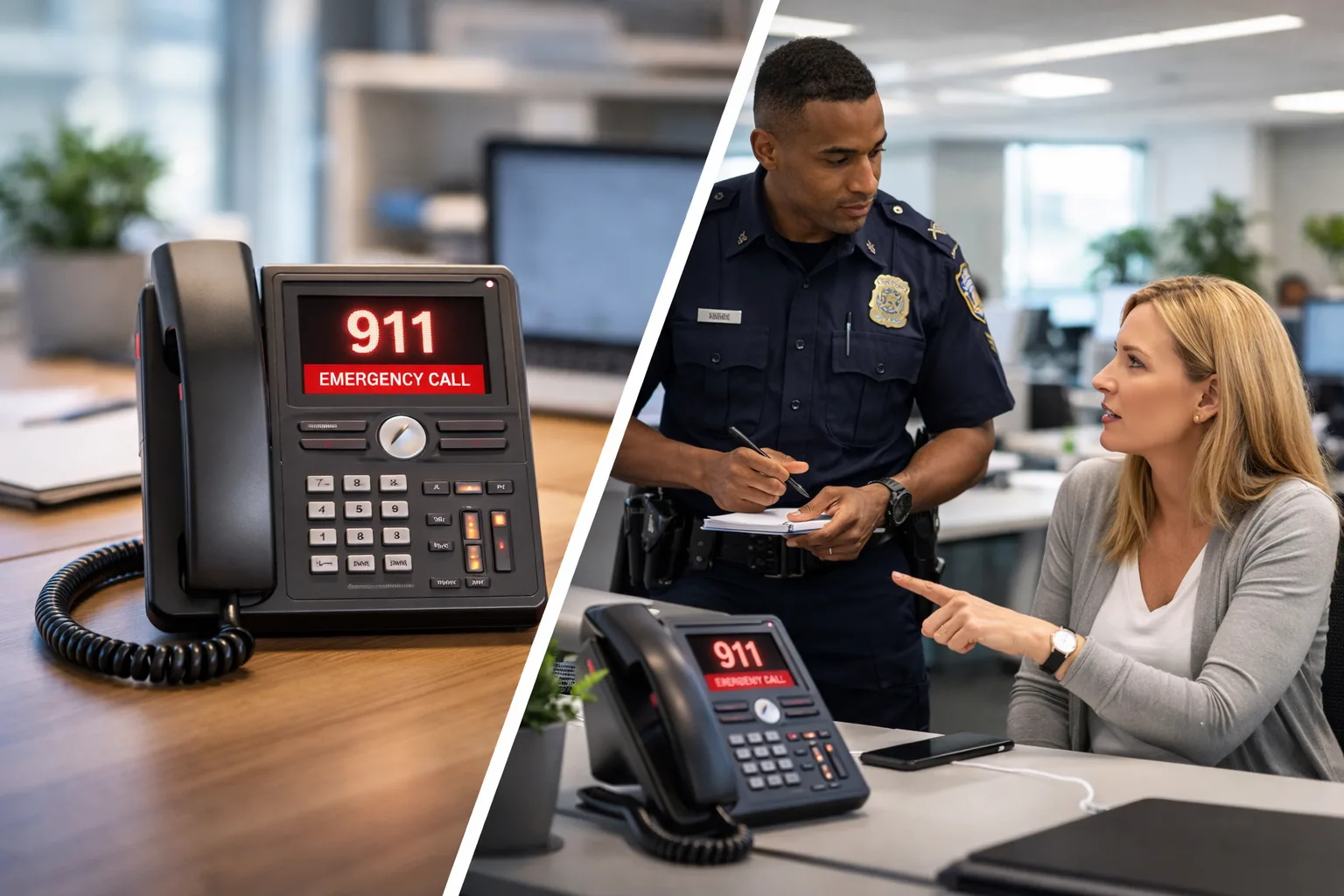
Many businesses believe their phone system is compliant with emergency calling requirements simply because employees can dial 911. If a call connects, it is assumed that everything works correctly. Unfortunately, that assumption is often wrong when it comes to VoIP systems.
Modern laws now require organizations to configure their phone systems to support accurate emergency communication. This is where VoIP 911 compliance becomes important. Businesses that use internet-based phone systems must understand how emergency calling works and what responsibilities they must maintain.
For SMBs, operations managers, and IT leaders managing phone systems, understanding VoIP 911 compliance helps protect employees, visitors, and customers while also meeting legal requirements.

How VoIP Emergency Calling Works
The biggest difference between traditional phone systems and VoIP systems comes down to how calls connect to emergency services.
Traditional Phone Lines
With legacy landline systems, the phone number is permanently tied to a physical address. When someone calls 911:
- The dispatcher automatically sees the caller’s location.
- Emergency responders receive the address instantly.
- The system does not depend on internet connectivity or location updates.
Because the line is physically installed at a fixed location, emergency services already know where the call originates.
VoIP Phone Systems
VoIP systems operate differently because they run through internet networks rather than dedicated phone lines. When someone places a VoIP emergency calling request:
- The call travels through internet infrastructure.
- The system checks a registered address in a location database.
- Emergency responders receive the address tied to that phone number.
This means location information must be registered and maintained in the system. If a device moves to a new office, building, or floor and the location is not updated, emergency services may receive the wrong address.
Understanding E911 for VoIP
To improve emergency response accuracy, E911 VoIP requirements were created. Enhanced 911, or E911, connects phone numbers with a registered location in emergency service databases.
When someone places a 911 call using VoIP:
- The system identifies the phone number.
- The database retrieves the associated location.
- Dispatchers receive that location information.
Many VoIP 911 service providers integrate their systems directly with E911 databases. This allows businesses to register physical addresses and update them when devices move. However, the system only works correctly when organizations maintain accurate location information.
VoIP 911 Compliance: Key Laws Businesses Must Understand
Over the past several years, new federal regulations have strengthened emergency calling requirements for businesses that use multi-line phone systems and VoIP services.
Two major laws now shape VoIP 911 compliance for organizations across the United States.
Kari’s Law
Kari’s Law was passed after a tragic incident in which a child tried to call 911 but could not connect because the hotel phone system required dialing a prefix first.
The law now requires businesses to configure their phone systems so users can dial 911 directly without needing to dial an additional number, such as 9 for an outside line.
Under Kari’s Law, organizations must ensure:
- Direct dialing to 911 works immediately
- No prefix is required before calling emergency services
- Internal staff receive a notification when someone dials 911
These notifications allow security staff, front desk teams, or office managers to respond quickly and guide emergency responders when they arrive.
Kari’s Law applies to many environments that use multi-line phone systems, including:
- Office buildings
- Hotels
- Schools
- Healthcare facilities
- Large commercial spaces
If your phone system still requires dialing 9 before external calls, it must be configured to allow direct emergency dialing.
RAY BAUM’s Act
While Kari’s Law focuses on dialing access, the RAY BAUM’s Act focuses on location accuracy.
This law requires that emergency calls provide a dispatchable location. Dispatchable location information includes:
- Street address
- Building information
- Floor number
- Suite or unit number
- Room or workspace location when applicable
For large organizations, this level of detail can make a significant difference during emergencies.
Consider a large office building or campus environment. If someone calls 911 and the dispatcher only sees the building address, responders may still spend valuable time locating the person in need.
RAY BAUM’s Act addresses this by requiring more detailed location information.
The law is particularly important for:
- Multi-floor offices
- Large corporate campuses
- Warehouses and distribution centers
- Hospitals and healthcare facilities
- Schools and
For businesses using VoIP systems, meeting VoIP 911 laws often requires working with providers that support detailed location tracking.
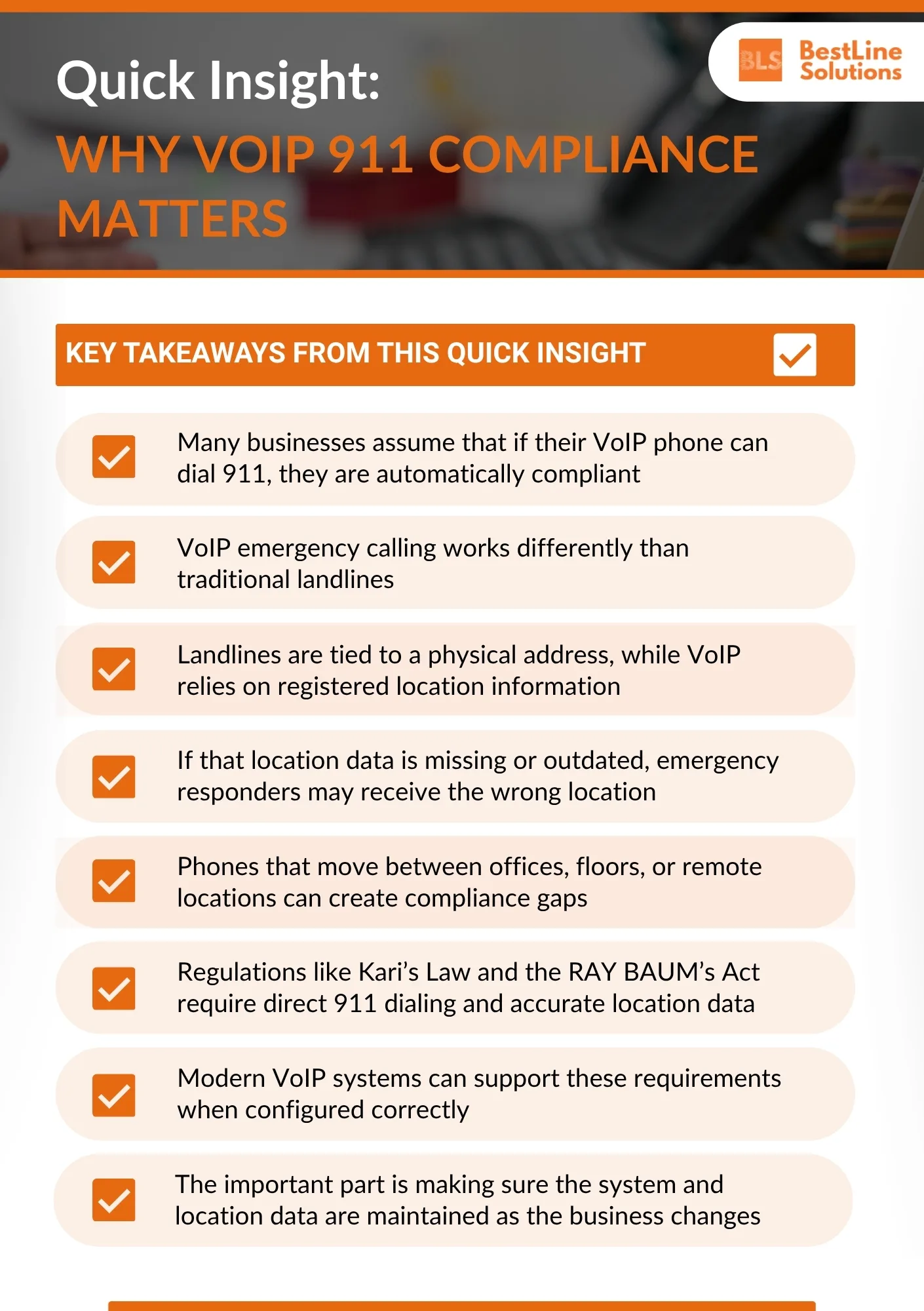
Common VoIP 911 Compliance Mistakes
1. Outdated Location Information
One of the most common issues involves outdated address records.
When VoIP phones move to new desks, offices, or buildings, the registered location in the system must also change. If the information remains unchanged, emergency responders may be sent to the wrong address.
This situation happens frequently during:
- Office moves
- Renovations
- Department relocations
- Equipment replacements
Keeping location records accurate is one of the most important responsibilities businesses must manage.
2. Remote and Hybrid Work Challenges
Remote work introduces additional complexity for VoIP emergency calling.
Employees using softphones on laptops or mobile devices may place a 911 call from their home, a hotel, or another remote location. If the system still shows the office address, emergency responders could receive incorrect location information.
Organizations should ensure remote workers understand how emergency calling works on their devices and how to update their location information when needed.
3. Dialing Prefix Issues
Older phone systems often require dialing 9 before placing external calls.
If that rule still exists and the system is not configured correctly, employees may dial:
9 + 911
This mistake can delay the emergency call while the system processes the extra digit. Under current regulations, phone systems must allow users to dial 911 directly.
4. Failure to Test Emergency Calling
Another common issue is failing to test emergency configurations.
Many businesses assume emergency calling works because their provider enabled E911 support during installation. But systems change over time as phones move, networks update, and offices expand.
Periodic testing with your service provider helps confirm that emergency calls route correctly and provide accurate location information.
What Businesses Are Responsible For
Even when working with VoIP 911 service providers, organizations still carry important responsibilities.
Your provider may supply the technology and infrastructure, but your team must maintain accurate system information.
Businesses must:
- Maintain accurate address information for all phone numbers
- Update location data when devices move
- Ensure direct 911 dialing works without prefixes
- Configure internal notifications when emergency calls occur
- Verify E911 database registration for all phone lines
If these elements are not maintained, emergency calls may fail to provide responders with the information they need.

How VoIP Providers Support Compliance
Modern VoIP 911 service providers offer several tools to help businesses meet compliance requirements.
These tools may include:
- E911 database integration
- Automated location management systems
- Multi-location tracking for large
- Emergency call routing support
- Compliance guidance related to Kari’s Law and RAY BAUM’s Act
These capabilities simplify compliance for organizations with multiple locations or complex office layouts. However, the system still depends on accurate data. If devices move without updating their location in the system, the technology cannot correct the error automatically.
Working with experienced providers can make compliance easier, but businesses still need clear internal processes for maintaining accurate information.

Why Proper VoIP 911 Configuration Protects Your Business
Emergency communication systems exist for a simple reason: safety.
When someone calls 911, every second matters. A misconfigured phone system can delay response time or send responders to the wrong location.
As more organizations adopt cloud phone systems and flexible work environments, maintaining VoIP 911 compliance becomes even more important.
Proper configuration ensures:
- Employees can reach emergency services immediately
- Dispatchers receive accurate location information
- Internal teams receive alerts during emergencies
- Organizations meet current VoIP regulations
For businesses operating across multiple offices, campuses, or remote environments, regular system reviews help confirm that emergency services continue to work as intended.

Make Sure Your Phone System Supports Safe Emergency Calling
Many organizations assume their emergency calling setup works correctly until a problem occurs. A simple configuration review can help confirm that your system meets current E911 VoIP requirements and supports accurate emergency response.
BestLine Solutions works with businesses to review VoIP phone systems and ensure emergency calling functions correctly across offices, campuses, and multi-location environments. If you are unsure about your current configuration, a system review can help identify gaps and ensure your phone system supports safe, compliant emergency communication. Book it here.
Frequently Asked Questions
What is VoIP 911 compliance?
VoIP 911 compliance means your internet-based phone system is configured so emergency calls can reach 911 correctly and provide accurate location information to responders. It is not enough for the call to connect. The system must also support proper routing, registered location data, direct 911 dialing, and emergency notifications where required. Businesses should review VoIP emergency calling after office moves, device changes, remote work changes, or phone system upgrades.
What is E911 for VoIP?
E911 for VoIP connects a phone number or device to registered location information so dispatchers can see where emergency help is needed. With VoIP, the phone may not be physically tied to one fixed line like a traditional landline. That means location records must be maintained accurately. If a phone moves to another office, floor, suite, or remote location, emergency responders may receive the wrong information unless the system is updated. Businesses should test and review E911 records regularly.
What does Kari’s Law require for business phone systems?
Kari’s Law generally requires multi-line phone systems to allow users to dial 911 directly without needing a prefix such as 9 for an outside line. It also requires internal notifications when a 911 call is made, when technically feasible. These notifications help front desk, security, or facilities staff respond quickly and guide emergency responders. Businesses with older systems should confirm that direct 911 dialing works from every phone, softphone, and location where employees may call for help.
What does RAY BAUM’s Act mean for VoIP phones?
RAY BAUM’s Act focuses on dispatchable location, which means emergency calls should provide more specific location details than just a main building address when needed. This can include floor, suite, room, or other information that helps responders find the caller faster. The rule matters for offices, campuses, warehouses, schools, healthcare facilities, and multi-floor buildings. Businesses should confirm that phone numbers, devices, and softphones are mapped to accurate locations, especially after moves or layout changes.
Who is responsible for keeping VoIP 911 location information updated?
The VoIP provider may supply E911 tools and routing support, but the business is usually responsible for keeping location information accurate when phones, users, offices, or devices change. This is where many compliance gaps happen. A phone may work for normal calls while still showing an outdated emergency address. Businesses should assign ownership for updating location records, test emergency calling with provider guidance, and include 911 configuration in office moves, department relocations, and remote work policies.