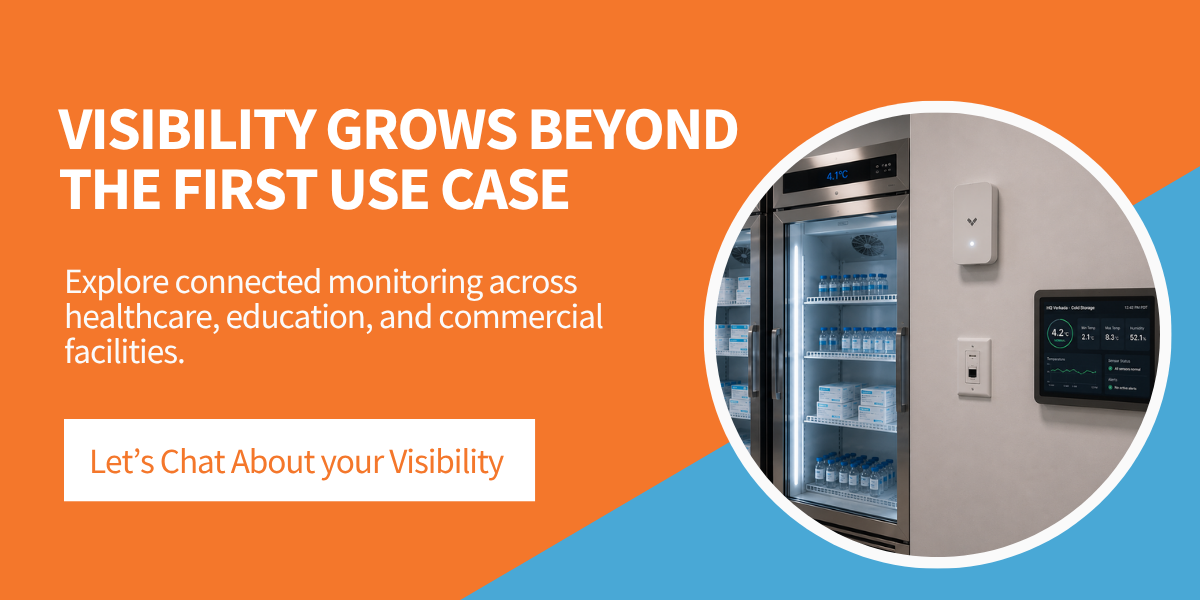
The Feature Everyone Notices First
When most people hear about Verkada environmental sensors, they think of one thing first: vape detection. And for good reason.
Schools across the country are deploying sensors in bathrooms and locker rooms to deter vaping, enforce policies, and respond faster when incidents occur. It is a highly visible, high-priority use case, especially in K–12 environments.
But focusing only on vape detection misses the bigger opportunity. Because what Verkada calls an “environmental sensor” is not just a compliance tool. It is a visibility tool.
And in many facilities, that visibility gap extends far beyond school bathrooms.

What an “Environmental Sensor” Actually Means
The challenge with the term “environmental sensor” is that it sounds generic. It does not immediately communicate urgency or value. That is why vape detection gets attention. It is specific. It solves a known problem.
But under the hood, these sensors are designed to monitor conditions across a space in real time. That includes temperature, humidity, air quality, and even the presence of certain gases. In other words, the same device that detects vaping can also help prevent equipment failure, protect inventory, and improve operational awareness.
The use case depends entirely on how you apply it.
https://youtu.be/YG6x7fG4JAk?si=UNXll25Obt07BRoG
The Real Opportunity: Expanding Use Cases
Many organizations start with a single use case and then realize they have only scratched the surface. A common example is in schools. Sensors are initially installed in bathrooms to address vaping. The problem is clear, and the ROI is immediate.
Then the questions start.
- Could we use these in cafeteria coolers?
- What happens if a freezer fails overnight?
- Can we get alerts if temperatures rise above safe thresholds?
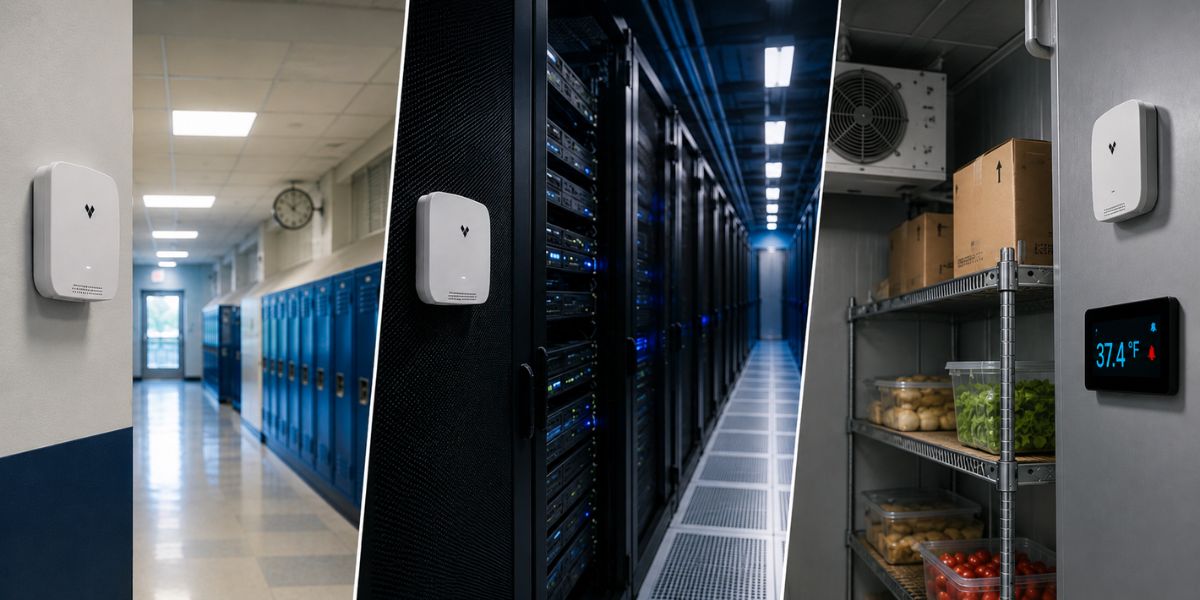
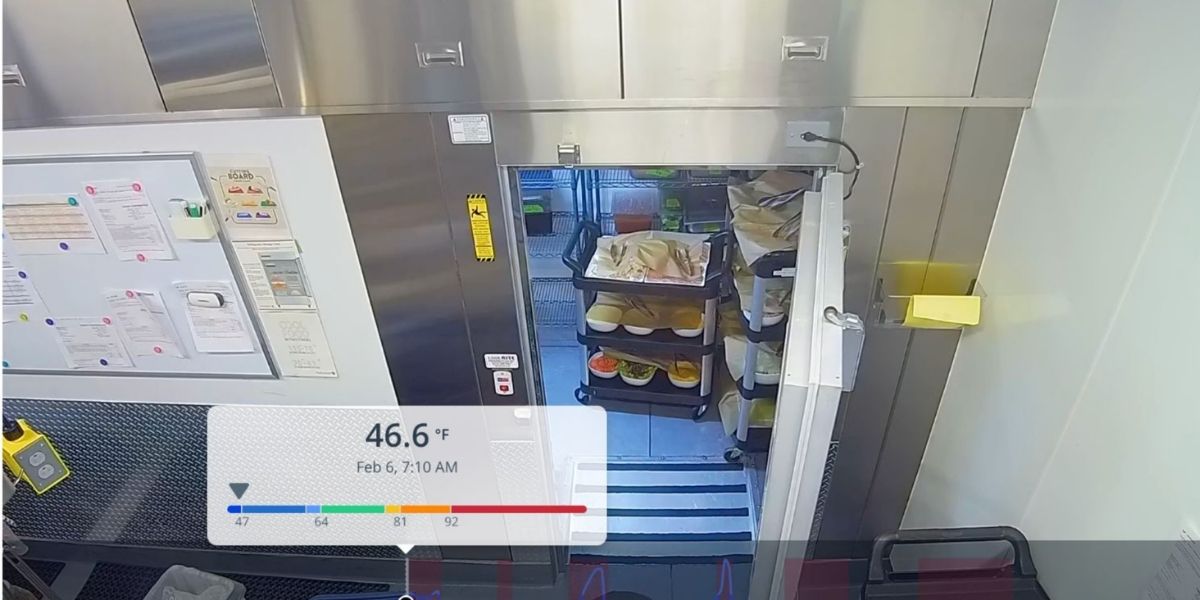
The answer is yes. That same sensor can monitor temperature in a cooler and send alerts to facilities staff before food safety becomes an issue. What started as a student behavior solution quickly becomes an operational safeguard. This pattern is not limited to schools.
Where Environmental Sensors Start Creating Real Value
Across different industries, the applications begin to stack up once visibility becomes the priority.
In data centers or IT environments, temperature and humidity monitoring can help prevent overheating or equipment damage. Instead of reacting to failures, teams can respond to early warning signs.
In facilities with mechanical systems or utility infrastructure, sensors can help detect abnormal conditions before they escalate. Whether it is air quality concerns or potential gas exposure, having real-time alerts changes the response timeline.
In commercial properties, property managers often struggle with fragmented systems. One dashboard for cameras, another for access control, another for building systems. Environmental sensors tied into a unified platform begin to simplify that picture.
And in workplaces, beyond schools, vape detection itself still plays a role. It is not limited to K–12. Property managers and corporate environments are increasingly using it to enforce policies and maintain workplace standards.
The common thread is not the specific feature. It is the shift from reactive to proactive management.

The Hidden Friction: Too Many Systems, Not Enough Visibility
One of the most consistent frustrations from facilities and operations teams is not a lack of tools. It is too many tools that do not talk to each other.
- Different systems for cameras.
- Different systems for access control.
- Different systems for environmental monitoring.
Each with its own dashboard, alerts, and learning curve. This is where Verkada’s broader ecosystem becomes relevant.
If an organization is already using Verkada cameras, there is often a missed opportunity. Environmental sensors, access control, guest management, and other tools can all live within the same platform. Instead of adding another siloed system, you are extending the one you already use.
For many existing Verkada clients, the first step is not adopting something new. It is realizing what is already available.
From Single Use Case to System-Wide Insight
The organizations that get the most value out of environmental sensors are not the ones that deploy them for a single purpose. They are the ones that expand their thinking.
They start with a specific problem like vaping. Then they begin asking operational questions like what else you should be monitoring, where you lack visibility, and what risks are you only finding out about after the fact?
That is where these sensors move from being a niche solution to a strategic tool.
A Simple Place to Start
If you are already using Verkada cameras, this is a straightforward conversation.
You are not starting from scratch. You are building on an existing platform. And if you are not, the same principle still applies.
Start with a clear use case. Vape detection, temperature monitoring, air quality. Something tangible. Then expand from there.
Environmental sensors are not just about safety or compliance. They are part of a broader shift toward connected, visible, and manageable environments.
Facilities teams want fewer blind spots. Leadership wants fewer surprises. Operations teams want fewer systems to juggle. This is one of the simplest ways to start closing those gaps.

It Starts with One Problem. It Rarely Ends There.
Vape detection may be what gets attention. But it is rarely where the value stops. In most cases, it is just the first signal that there are other areas of your facility you are not fully seeing. And once you start looking at it that way, the conversation becomes much bigger than a single feature.
If you are already using Verkada or exploring it for a specific use case like vape detection, it may be worth stepping back and looking at the bigger picture.
BestLine Solutions can help you map out where environmental sensors fit into your environment, identify additional use cases, and determine how to expand without adding complexity.
Start with one problem. Build from there.
Frequently Asked Questions
What do Verkada environmental sensors detect?
Verkada environmental sensors can help monitor conditions such as vape-related activity, air quality, temperature, humidity, noise, motion, and other environmental changes depending on the model and configuration. Many organizations first notice them because of vape detection, especially in schools, but the broader value is facility visibility. Sensors can alert teams when conditions change in spaces that are not constantly staffed. Facilities leaders should start with one clear use case, then evaluate where additional monitoring would reduce risk.
Are Verkada sensors only for vape detection?
No, Verkada sensors are not only for vape detection. Vape detection is a common entry point, but the same environmental monitoring concept can support temperature alerts, air quality concerns, humidity monitoring, noise awareness, and operational visibility in sensitive spaces. Schools, offices, commercial properties, data rooms, storage areas, and facilities teams can all use sensors differently. The best question is not whether the sensor detects vaping. The better question is which spaces currently create risk because no one knows conditions are changing until too late.
Where should environmental sensors be used?
Environmental sensors should be used in areas where real-time conditions matter but constant human monitoring is unrealistic. Common examples include school bathrooms, locker rooms, server rooms, cafeterias, coolers, storage areas, mechanical rooms, commercial buildings, and shared workplace spaces. Placement should match the use case. Vape detection, temperature monitoring, and air quality monitoring may require different locations and alert thresholds. Before installing sensors, define what you need to detect, who receives alerts, and what action should follow.
How do environmental sensors help facility teams?
Environmental sensors help facility teams by turning hidden conditions into actionable alerts. Instead of discovering a failed cooler, overheated equipment room, air quality concern, or policy violation after the damage is done, teams can respond earlier. The value is stronger when sensors connect with cameras, access control, and dashboards that staff already use. Facilities teams should avoid adding another disconnected tool if the real problem is too many separate systems. The goal is faster awareness and simpler response.
Are environmental sensors worth it for businesses?
Environmental sensors can be worth it when they reduce blind spots in areas that affect safety, operations, compliance, equipment, inventory, or customer experience. The return is usually strongest when there is a specific risk, such as vaping, temperature-sensitive inventory, server room heat, air quality concerns, or delayed facility response. They are less useful when deployed without a clear plan. Start by identifying where the business currently finds out about problems too late, then decide whether sensor alerts would change the response timeline.